DISCLAIMER ....
Blog Disclaimers
Whether you write about traveling the world, give out makeup tips, or review the most recent action movies as they hit theaters, running a blog is an easy, fun way to share your thoughts with the entire world.
But with that fun comes some serious responsibility. One of your most important duties is to post a proper blog disclaimer that keeps you out of legal hot water.
What's a Blog Disclaimer?
Let's start by clarifying what a disclaimer is.
Simply put, a disclaimer is a written statement that says you're not responsible for certain actions, problems, or outcomes.
For example, if you read an article about heart attacks that was written by a reputable medical organization, you'll see a statement at the bottom that says the information provided in the article isn't meant to replace a trip to your doctor.
Take a look at the disclaimer used by the Physicians Committee for Responsible Medicine:
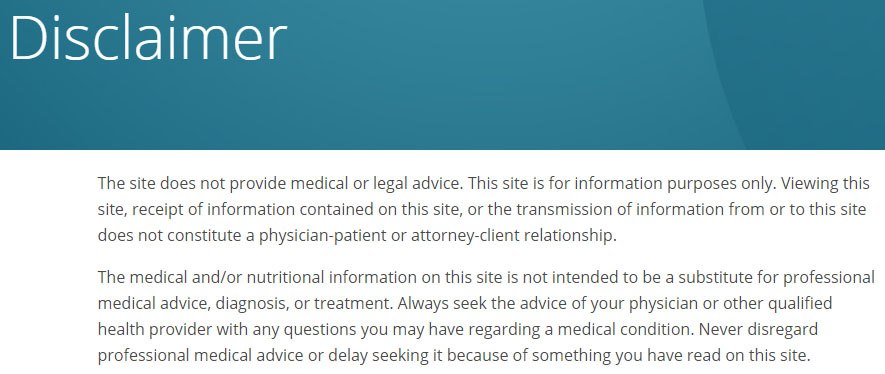
PCRM makes it very clear that the knowledge they're sharing is strictly for informational purposes. It's not designed to be your diagnosis and treatment plan. Those details have to be taken care of by your doctor.
By having this disclaimer in place, the PCRM won't be liable for what happens if you decide to skip a visit to your doctor and try to treat yourself based on what you've read on the website and things go badly because of that.
A disclaimer like this may seem like such commonsense that it doesn't even need to be said, but when it comes to publishing content on the world wide web, you can't be too careful. You have to do everything possible to limit your legal liability.
So how does this apply to your blog?
There are all kinds of disclaimers that should go on a blog. Depending on what you write about, you may need several specific disclaimers.
In most cases, disclaimers have their own page on the blog, and links to that page can usually be found in one or two places -- in the footer of your blog, or in the sidebar.
Or, if you have a separate Terms and Conditions page on your blog, you can put the disclaimer on there.
No matter where you put them, blog disclaimers need to be written in plain English so that the average reader can understand exactly what you're disclaiming.
What Blog Disclaimers Might Apply to You?
This will of course depend on the nature of your blog, but here are a few of the most common and most important blog disclaimers you may need.
- A disclaimer that mentions your employer
You don't have to mention your employer by name, but you should have a disclaimer that makes it clear that these are your opinions, and not necessarily the same opinions that your employer has. If you're a member of any organizations apart from the company you work for (like volunteer organizations), you may want to extend your disclaimer to them, as well.
- A disclaimer that says your opinions may change
Because you're always adding new content to your blog, you may change your mind about a few older topics. While you certainly have the right to change your mind, let your readers know it's a possibility. That way, they won't be stunned or angry if it happens.
- A disclaimer that says you're not responsible for the comments your readers leave
Great blog posts tend to generate a lot of comments. However, there's no guarantee that all of those commenters are going to share your point of view, or the point of view of other readers. There's also no guarantee that your commenters will say nice things. Since you can't control what someone types, you need to eliminate your liability for what they end up saying.
- A disclaimer that gives you the right to delete comments
Comments
Post a Comment